
This article is a part of your HHCN+ Membership
As medical advancements and new technologies have enabled pediatric patients to remain at home, demand for at-home pediatric private-duty services has dramatically risen.
While demand has reached a historic high, according to industry veterans, industry-specific challenges require providers to strategize to offer high-quality care at sufficiently reimbursed rates – including a strong clinical backbone, development of internal talent, and a focus on collaboration.
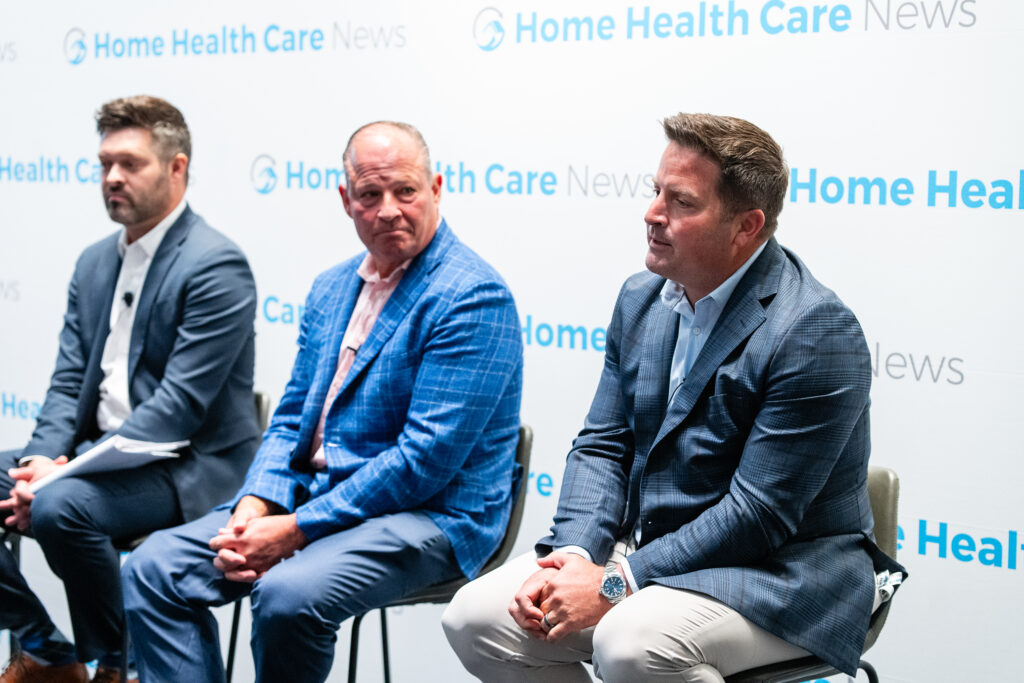
While caring for pediatric patients is extremely rewarding, experts said at Home Health Care News’ FUTURE conference, stark disparities in state reimbursement rates and pervasive labor shortages create a challenging operating environment for home health providers seeking to expand into pediatric private duty services.
“Depending on the market, I think you have a tremendous opportunity to make a difference in the community,” Mark Bush, CEO of Care Options for Kids, said. “But it’s such a heavy, emotional, psychosocial [load]. This is a hard business to be a sidecar to something else. I think you would likely need a dedicated team focused on private duty, because it’s 24/7. It’s very different than some other, more intermittent, home health care delivery services.”
Dallas-based Care Options for Kids (COFK) is one of the country’s largest pediatric-focused networks, serving over 28,000 children across 12 states. It provides home-based pediatric nursing and therapy services, applied behavior analysis (ABA) therapy, family caregiver services and school-based services.
In June, the organization unified its 14 pediatric in-home care organizations under a single brand. Bush has previously told HHCN that he aims to almost double its geographic footprint in the next five years.
Key strategies
A successful and sustainable pediatric program requires a collaborative and aligned clinical approach.
“The consistent driver of success has been a strong and aligned operating clinical partnership … that operates off some form of balanced scorecard: patient safety and quality compliance, the experiences that we’re choosing to create for stakeholders and then financial,” Brad Bennett, CEO of MGA Homecare, said.
Scottsdale, Arizona-based MGA Homecare provides pediatric private duty nursing, skilled nursing visits, occupational therapy, physical therapy and speech therapy in home- and community-based settings. It operates in Arizona, Colorado, North Carolina, Texas, Washington and Tennessee.
Businesses within and outside of pediatric private duty services depend on strong partnerships with stakeholders and the development of internal talent, he said.
Having a data-driven approach and being able to show payers cost savings is essential, Ezra Kuenzi, CEO of Connect Pediatrics, agreed. Building relationships with payers and telling data-driven stories are also mission-critical.
“For example, finding a patient … [who] spent 100 days in the hospital, and this could have been prevented, and you guys paid out X amount of dollars,” Kuenzi said. “Whereas, if this kid were at home, not only would it have a much more positive effect on their family life, but also from a care standpoint, they’d be in a much better spot. Trying for that emotional appeal, to a certain extent, to humanize that element of it. Because I think a lot of times, big insurance companies are looking solely at numbers.”
The data, including decreased hospitalizations and lower overall spend, should speak for itself, Kuenzi said, but crafting a story to convince payers can require persistence.
Dallas-based Connect Pediatrics is a pediatric home health care provider serving children across Texas. It offers private duty nursing and therapy services, including occupational therapy, physical therapy and speech therapy.
Overcoming challenges
The pediatric private duty services industry is not without its challenges, however. In addition to some of the woes facing home-based providers overall, serving pediatric patients comes with a specific set of struggles.
Staffing is already a concern for home-based providers, but serving a pediatric population can create an emotional toll on front-line workers.
“Sometimes what we’ve seen is with staffing, … a nurse goes into the home, and all of a sudden that nurse is like, I can’t take this type of energy day in and day out. I want out,” Kuenzi said. “And then we go through a series of trying to restaff that home. So all of a sudden, we’ve had 0, 15, nurses in a six-month time period. And that can be a challenge. … That’s where we have to come in and have those tough conversations sometimes with families.”
Hardships and devastation can mean that parents are not always rational, Bennett said. MGA Homecare, therefore, spends a significant amount of time working with nurses on interpersonal skills – and sometimes discharges a patient if it becomes too difficult to keep a nurse.
Reimbursement also poses a significant challenge, with a disparity between hospital-based care and home-based care rates.
In some states, providers without a large enough footprint may struggle to achieve acceptable fee-for-service reimbursement rates initially. Providers entering a new state should therefore work to achieve higher rates out of the gate to avoid an uphill battle going forward.
“The reimbursement environment varies so much, state to state, and [involves] trying to get payers to really assess the acuity factor in terms of how care is reimbursed, because providers like us are actually incentivized sometimes to take care of lower acuity patients, because it costs less and is lower risk,” Bush said. “And that’s a dynamic we’re working hard to try and shift together.”
Companies featured in this article: