
This article is a part of your HHCN+ Membership
AI-based tools can ease the burden of chronic home-based care staffing shortages, administrative labor and scheduling difficulties, but the tools are only effective if employees use them.
A lack of time, fear of lost productivity and threats to professional identity are the biggest hurdles to AI change management, industry leaders told Home Health Care News. Leading with empathy and framing the change as upskilling can help employees embrace new technology.
“The reason they fail wasn’t because, for the most part, the solution didn’t do what it needed to do. It was the adoption of the solution didn’t actually happen,” Greg Meyers, chief operating officer at TheKey, told Home Health Care News. “All of our projects will fail if we don’t have very solid change management.”
Delray Beach, Florida-based TheKey provides in-home care, skilled nursing, end of life care, Alzheimer’s and dementia care and other services across 32 states and over 110 locations.
Many home-based care companies are adopting AI-based tools. In a recent HHCN pulse survey, 73.3% of home-based care providers reported exploring potential AI use cases, piloting AI tools and integrating them in select departments.
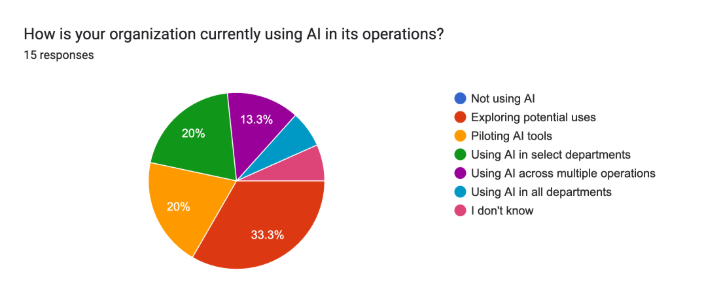
Twenty providers weighed in to HHCN’s survey about AI tool change management.
More than 50% of respondents said they worked for organizations that provide Medicare-reimbursed skilled home health, and 66% reported that their organizations provide personal home care, whether private-pay or Medicaid-reimbursed. All respondents worked for organizations with between one and 20 locations.
Forty percent of respondents reported having no formal training for their employees, while 20% had vendor-provided training and another 20% had an internal training program.
Finding super users
For Tribute, the strategy and vision for a department, as well as its unique needs, must drive the AI implementation strategy, as opposed to the technology dictating change, Galip Gencer, director of strategic planning and project management at Tribute Home Care. told HHCN.
“We pretty much went into each leader defining where they want to take their department in the next two years, and then we started building tools to support their strategies instead of just building tools, so each department had different calls,” said Gencer.
Tribute Home Care, based in Framingham, Massachusetts, provides in-home personal care, medication assistance, companionship, dementia care and other services in Massachusetts, Maryland, Illinois and Virginia.
This meant defining key users from each department, called AI key users, and getting them involved in the early stages of internally developed tools and their adoptions so that they have a say in the process, Gencer said.
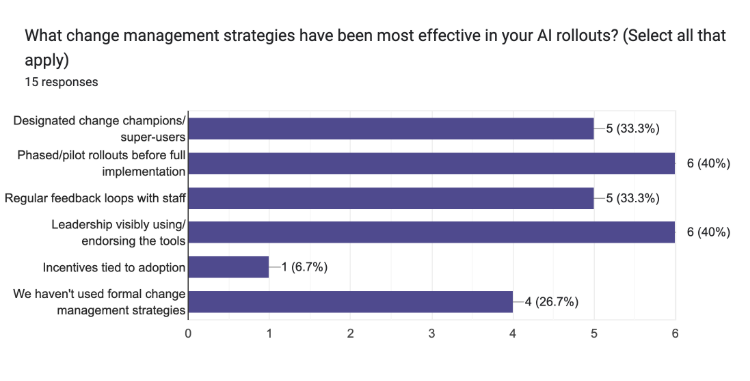
Designating change champions and super users was one of the most popular AI change management strategies, according to HHCN’s survey, behind phased rollouts ahead of full integration and leadership visibly endorsing the tools.
However, while AI can streamline operations such as scheduling, staffing and documentation, employees can often feel hesitant or even scared toward embracing new adoption.
Trisha Crissman, president and CEO of CommonSpirit Health at Home, described in a recent episode of HHCN+ TALKS that some employees showed hesitation around AI and ambient scribing. She said some employees were slow to adopt new tools, like ambient scribing. Frontline workers were used to using a tablet for documentation, she said, rather than using conversational assessment dialogue. Loveland, Ohio-based CommonSpirit Health at Home provides home health, hospice care, palliative care and home infusions within 15 states.
“The change management piece, we underestimated. It doesn’t mean we won’t get to where we’re going because we always do. It’s just a little bit slower of an adoption timeline than we expected,” Crissman said.
Slow to adopt
There are many reasons why employees may struggle to embrace AI technology.
Learning any new tool takes time out of an employee’s day. If an employee is very busy, they might simply rely on their familiar processes to save time, Tribute Home Care CEO John Sneath said.
“We have this agent that, when we first start using it in scheduling, it takes a while to set it up,” Sneath said. “It’s just easier for a scheduler to do what they’ve been doing, which has worked well, and do that.”
Resistance to learning new tools increases if the tools themselves are hard to use, said Emily Kraeter, chief people officer at TheKey. New processes are difficult to learn, and so the best new tools are the ones that remove as much friction as possible, she said.
Still, the process of advancing inherently requires someone to go slower before they go quicker. She describes it as the “J” curve, where productivity dips after introducing a new tool, rising above levels seen before the tool was deployed.
Many employees can get discouraged during the initial drop in productivity, Kraeter said, which can dissuade them from integrating new processes.
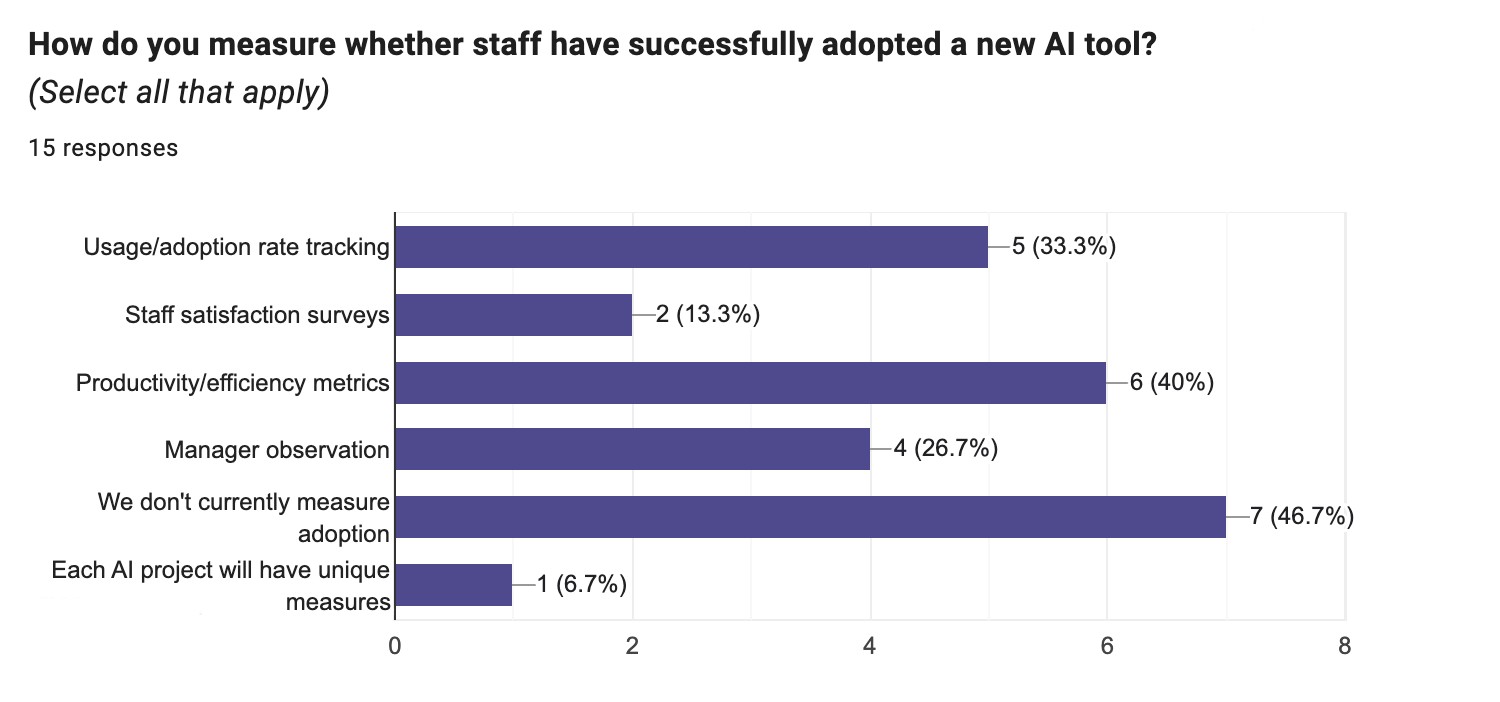
However, respondents to HHCN’s survey primarily identified long-term productivity as a primary indicator of successful change management.
“It’s really easy during that initial dip to say, ‘This just doesn’t work. It makes me slower. I can’t do it. I’ve got goals that I’ve got to meet. I’m having challenges meeting my targets right now because I’m going slower,’” Kraeter said. “That’s where the leader is super critical because they have to lead their team through.”
Fear of change
Most home-based care providers in the HHCN’s survey reported lack of staff trust or buy-in as the largest gap to AI adoption.
The reason may be that, while the initial hesitation to learning new technology is a hurdle, one of the biggest challenges to change management is how new tools affect a worker’s identity, Kraeter said.
Workers who take pride in a key part of their job may have to adjust to how they perceive their work. If a caregiver manager has developed a strong skillset when it comes to scheduling, scheduling AI tools could change the way they relate to their job.
“Even with the very best bought-in caregiver managers, if this is part of their identity, they’re not going to want to do it,” Kraeter said. “It doesn’t matter if the technology works well. It doesn’t matter if it’s really easy to do. They’re going to want to default to what feels known and comfortable to them and keeps their identity intact.”
Some ways leaders can help with the identity aspect of change management is to reduce what feels scary for employees. Kraeter emphasized leading with empathy for what the employee may be feeling during this period of change.
Many employees may feel they may not be as needed, which can be distressing, Kraeter noted. Effective change management for caregiver managers validates these feelings with empathy while emphasizing where their skills will truly lie.
For instance, AI-based tools will be able to handle staffing a shift, reconciling payroll or accommodating a last-minute scheduling change. But what that caregiver manager can still provide is their human judgment, their own empathy and the connection they bring to caregivers and their families, Kraeter said.
Meyers described offsetting what might feel scary to an employee to what makes them feel safe. So for instance, the scariness of a new AI tool would be rectified with the assurance that the tool is ultimately for the financial health and quality of the company.
“As we take something out from an AI perspective, we’re being very deliberate about subbing in what’s the growth frontier, and a summary of what we’re able to do more financially and from a quality perspective with the exact same amount of people we have. We just spend a little money on some AI augmentation,” Meyers said.
Framing AI as a career development tool can also be helpful, Kraeter said Even if an employee is hesitant to embrace AI technology and would prefer to keep their old processes the same, it’s likely that TheKey’s competitors are also embracing AI-enabled technology or will in the near future.
A provider’s change management strategy could help upskill workers, encouraging them to continue working in their field.
“The message for our leaders is: The kindest thing that you can do for your employees is help them learn how to use this technology, because it’s not just an ‘us’ thing. It’s not going away,” Kraeter said. “It’s the compassion for the moment, but it is also helping … them navigate this change and upskill [employees] so that they continue to have a really, really successful career doing the thing they love.”
Companies featured in this article: